_edited.jpg)
Seasonal Paver Care Tips to Protect Outdoor Surfaces Year Round
Pavers work hard in every season. They handle rain, sun, foot traffic, patio furniture, lawn debris, cars, ice, and the occasional spilled drink. When they are cared for well, they stay level, drain properly, and keep their color longer. When they are ignored, small issues can turn into weeds, stains, shifting edges, and cracked surfaces.
The good news is that paver care does not have to be complicated. A steady seasonal routine can protect patios, walkways, pool decks, and driveways from the most common problems. The key is knowing what each season does to your outdoor surfaces and handling small maintenance tasks before they become larger repairs.
This guide covers practical seasonal paver care and maintenance tips for year-round protection, including cleaning, sealing, drainage checks, winter prep, and signs that it may be time to call a professional.

Why seasonal paver maintenance matters
Pavers are durable, but they are not maintenance-free. Their strength comes from the whole system beneath them, including the base, sand joints, edging, slope, and drainage. When one part fails, the surface starts to show it.
A few common problems develop slowly:
Joint sand washes out after heavy rain.
Weeds take root in open joints.
Stains settle into unsealed or worn surfaces.
Freeze-thaw cycles push and shift loose areas.
Poor drainage creates dips, pooling, and erosion.
Edges spread when restraints loosen.
Regular paver maintenance helps catch these issues while they are still manageable. A patio that needs fresh joint sand is a weekend project. A patio with widespread sinking may need sections lifted, re-leveled, and reset.
Think of seasonal care as inspection plus prevention. You are not just making the surface look clean. You are protecting the structure underneath.
Spring is the season for inspection and cleanup
Spring is the best time to assess winter wear. Cold weather, snow, ice, and moisture can expose weak spots that were not obvious in fall.
Start with a full walk-through after the weather warms up. Look at the surface in daylight and after rain if possible. Water tells you a lot about how the paver system is performing.
Check for:
Low spots where water collects
Raised or uneven pavers
Loose border stones
Missing joint sand
New weed growth
White haze or mineral deposits
Cracks, chips, or surface scaling
Stains from leaves, rust, oil, or planters
A simple cleaning can restore the surface and reveal what needs attention. Sweep away leaves, soil, mulch, and winter debris. Rinse the area with a garden hose. For general dirt, use a paver-safe cleaner and a stiff-bristle brush.
Avoid harsh chemicals unless the product is made for your paver material. Acidic cleaners can damage concrete pavers and may discolor natural stone. If you use a pressure washer, use caution. Too much pressure can blast out joint sand or roughen the surface.
Refill joints before weeds settle in
Joint sand helps lock pavers in place. When it washes away, the surface becomes more vulnerable to movement and weeds.
After spring cleaning, inspect the joints. If they look low or empty, sweep in fresh joint sand. Polymeric sand can be helpful because it hardens after activation and resists washout better than regular sand. It must be installed correctly, so follow the product directions carefully.
A few careful steps matter:
Let the surface dry before adding sand.
Sweep sand evenly into the joints.
Remove excess sand from the paver faces.
Compact the surface if needed.
Mist lightly according to the sand instructions.
Too much water can wash polymeric sand out before it sets. Too little may prevent proper bonding. If you are unsure, especially on a large driveway or patio, professional help can prevent a messy result.
Summer care focuses on heat, stains, and heavy use
Summer is when outdoor surfaces get the most use. Patio furniture moves around. Grills and fire pits come out. Pool water splashes. Kids, pets, guests, and vehicles all add wear.
This is the season for light, consistent upkeep.
Sweep often to remove grit. Sand, leaves, and dirt act like abrasives under shoes and furniture legs. They can dull the surface over time. Rinse spills quickly, especially grease, wine, coffee, sunscreen, and rust-prone items.
For patios and outdoor kitchens, keep a few habits in place:
Use grill mats in cooking areas.
Place saucers under planters.
Add pads under furniture legs.
Move rugs occasionally so moisture does not stay trapped.
Keep metal décor from sitting directly on damp pavers.
Clean pool chemicals and salt residue promptly.
Good summer care also includes watching for ants. Ant activity can disturb joint sand and create small piles around joints. Address the problem early so it does not weaken the surface.

Decide whether the surface needs sealing
Sealing is one of the best ways to support outdoor paver protection, but it is not a one-time fix. Sealers wear down from sun, rain, traffic, and cleaning. The right schedule depends on the paver material, the sealer type, climate, drainage, and how heavily the area is used.
A sealer can help:
Reduce staining
Slow color fading
Make cleaning easier
Stabilize joint sand
Add a matte, satin, or enhanced finish
Protect against moisture penetration
The best way to seal and protect pavers across seasons starts with preparation. Pavers must be clean and dry before sealing. Stains should be treated first because sealer can lock them in. Efflorescence, the white powdery deposit that sometimes appears on concrete pavers, may also need to be cleaned before sealing.
Do not seal when rain is likely or when temperatures fall outside the product’s recommended range. A rushed sealing job can leave streaks, cloudiness, bubbling, or uneven color.
If the surface has old sealer, heavy staining, or drainage issues, get advice before applying a new coat. Sealing over problems rarely solves them.
Fall prep helps prevent winter damage
Fall is the most important season for preventing winter damage to patio and driveway pavers. Cold-weather problems often begin with moisture. Water enters joints, dips, or small voids. When it freezes, it expands. That pressure can shift pavers, open joints, and worsen uneven areas.
Before winter arrives, remove leaves and organic debris. Wet leaves can stain, and decaying material can hold moisture against the surface. Clean gutters and downspouts near paved areas so runoff does not dump water onto patios or walkways.
Check the slope of the surface after a fall rain. Water should flow away from the home and should not sit in puddles for long periods. Persistent pooling may signal a base or grading issue.
Fall is also the right time to:
Replace missing joint sand
Pull weeds before they seed
Clean stains before cold weather sets in
Repair loose edge restraints
Move planters that trap moisture
Store furniture that could scrape during storms
Pay extra attention to driveways
Driveway pavers face more stress than patios. Vehicle weight, oil, tire marks, road salt, and snow removal all affect the surface.
Before winter, look for tire ruts, sinking spots, or widening joints. These may indicate base movement. Small localized repairs are easier than waiting until a larger section settles.
If oil stains are present, treat them before winter. Cold weather can make stain removal harder, and snow cover may hide problems for months.
For long-term paver patio maintenance and driveway care, fall is the season to tighten up the whole system. A cleaner, drier, better-supported surface has a much better chance of getting through winter in good shape.
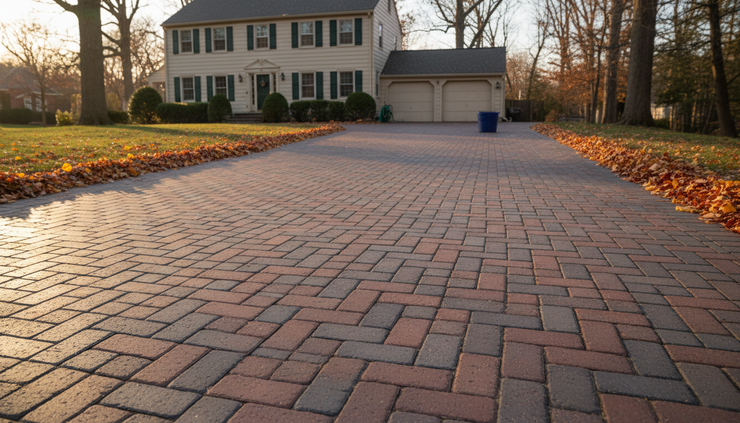
Winter care should protect the surface without damaging it
Winter maintenance is a balance. You need safe walkways and driveways, but aggressive snow and ice removal can damage pavers.
Use a plastic shovel or a snow blower with proper clearance when possible. Metal shovel blades can scratch surfaces, especially if the pavers have a textured finish or sealer. If you hire snow removal, make sure the crew knows the area is paved with pavers and should not be scraped too aggressively.
Deicing products also deserve care. Some salts can damage pavers, harm nearby plants, or accelerate wear on sealers. Use deicer sparingly and choose products labeled as safer for concrete or paver surfaces. Sand can improve traction, but it should be swept up after winter because it can clog joints and drains.
Avoid these winter mistakes:
Chipping ice with sharp metal tools
Piling heavy snow where meltwater drains back across the surface
Overusing deicing salt
Ignoring clogged drains
Letting downspouts discharge onto walkways
The goal is not a spotless winter surface every day. The goal is safe access without causing unnecessary surface damage.
Year-round habits that make the biggest difference
Seasonal routines matter, but a few habits help all year.
Keep water moving away from the surface
Water is the main driver behind many paver problems. It erodes joint sand, weakens base material, creates stains, and fuels freeze-thaw damage.
Make sure downspouts, drains, and grading send water away from paver areas. If water always collects in the same place, do not ignore it. That spot will likely get worse.
Clean stains as soon as possible
Fresh stains are easier to remove than old ones. Blot spills instead of spreading them. Use a cleaner made for the stain type and paver material.
Common stain sources include:
Cooking oil and grease
Rust from metal furniture
Tannins from leaves and acorns
Hard water deposits
Mildew in shaded areas
Tire marks on driveways
Test cleaners in a small area first. Natural stone and concrete pavers can react differently.
Protect edges and borders
Edges hold the field of pavers together. If border restraints shift or loosen, the entire surface can spread over time.
Check edges after storms, freeze-thaw cycles, and heavy use. Pay special attention where pavers meet lawn, mulch beds, or gravel.
Watch for early signs of movement
A few uneven pavers may not seem urgent, but they can create trip hazards and drainage issues. Raised areas, rocking pavers, sinking spots, and widening joints all deserve attention.
Small repairs often involve lifting the affected pavers, correcting the base, and resetting them. This is one reason pavers are so practical. You can repair sections without replacing the entire surface.
When professional help is the better choice
Many paver maintenance tasks are DIY-friendly. Sweeping, rinsing, light stain removal, and basic inspections are easy to handle. Other tasks call for experience, tools, and a clear understanding of base prep and drainage.
Consider professional help when you notice:
Large settled areas
Repeated pooling after rain
Widespread joint sand loss
Loose or failing edge restraints
Sealer turning cloudy or uneven
Deep stains that do not respond to cleaning
Pavers shifting on a driveway
Plans for a new patio, walkway, or outdoor living space
A professional can also help with design choices that reduce maintenance from the start. The right paver type, pattern, base depth, drainage plan, edging, and sealer all affect how well the surface performs over time.
That is where a paver design consultation can be useful. It is not only for new installations. It can also help homeowners understand whether an existing surface needs maintenance, repair, sealing, or redesign.
A simple seasonal paver care checklist
Use this checklist as a year-round guide for how to protect outdoor pavers year round.
Season | Main goal | Best maintenance tasks |
Spring | Inspect and refresh | Clean debris, check for movement, refill joints, treat winter stains |
Summer | Prevent stains and wear | Sweep often, rinse spills, manage furniture, consider sealing |
Fall | Prepare for cold weather | Remove leaves, fix drainage, replace joint sand, inspect edges |
Winter | Reduce surface damage | Use gentle snow removal, limit deicer, keep drains open |
This rhythm keeps paver maintenance manageable. Instead of waiting for major repairs, you give the surface attention when it needs it most.

Protect your investment and keep your outdoor spaces pristine
From winter freeze-thaw cycles and heavy rain to summer heat, changing seasons can take a quiet toll on pavers. Proper maintenance and thoughtful surface design help prevent shifting, cracking, staining, and drainage problems. With the right care, a driveway, walkway, or patio can stay attractive and functional through every season.
If you need advice on long-term surface protection or want to design a durable outdoor space built for the elements, expert guidance can make the process easier.
Schedule your paver design consultation today with Simple Pavers and build an outdoor surface designed for lasting beauty.
A good paver care routine does not require constant work. It requires timing. Clean in spring, protect in summer, prepare in fall, and use winter-safe methods when the cold arrives. That steady approach keeps small problems from becoming expensive ones and helps your outdoor spaces look ready to use year round.


Comments